Reverie
Honorable Mention @ FigBuild 2026. Every dream, a revelation.
MY ROLE
Product Designer
TIMELINE
March 2026
(3 days)
TOOLS
Figma, Midjourney, Cursor, Nano Banana
OVERVIEW
The Challenge
For FigBuild 2026, Figma's annual design hackathon, our team of four was given a speculative design prompt:
"Identify something intangible, invisible, or previously unmeasurable about the human sensory experience and design a speculative tool to track and influence it."
With my teammates Ellie, Emily, and Nancy, we spent 3 days brainstorming, iterating, and prototyping on our solution. Out of 690 total teams, we were selected as 1 of 5 teams to win the $1000 Honorable Mention Prize, and placed in the Top 13 Overall.
PROBLEM
Every night, your brain tells you a story. You almost never remember it.
We spend roughly a third of our lives asleep. During REM sleep, the brain enters its most unfiltered state — processing emotional memory, forging creative connections, and rehearsing responses to threats.
However, research shows that only about 5-10% of dreams are actually remembered. Think about it: We have apps that track everything about sleep — the quantity of sleep, your resting heartbeat, its different stages — everything except what actually happens during sleep itself. We've optimized the container and ignored its contents entirely.
You forget
90%
of your dreams in the first 10 minutes of waking up
(Mark Solms, 2000).
Only
1 in 10
people say they always remember their dreams
(CBS News / SSRS, 2021).
SOLUTION
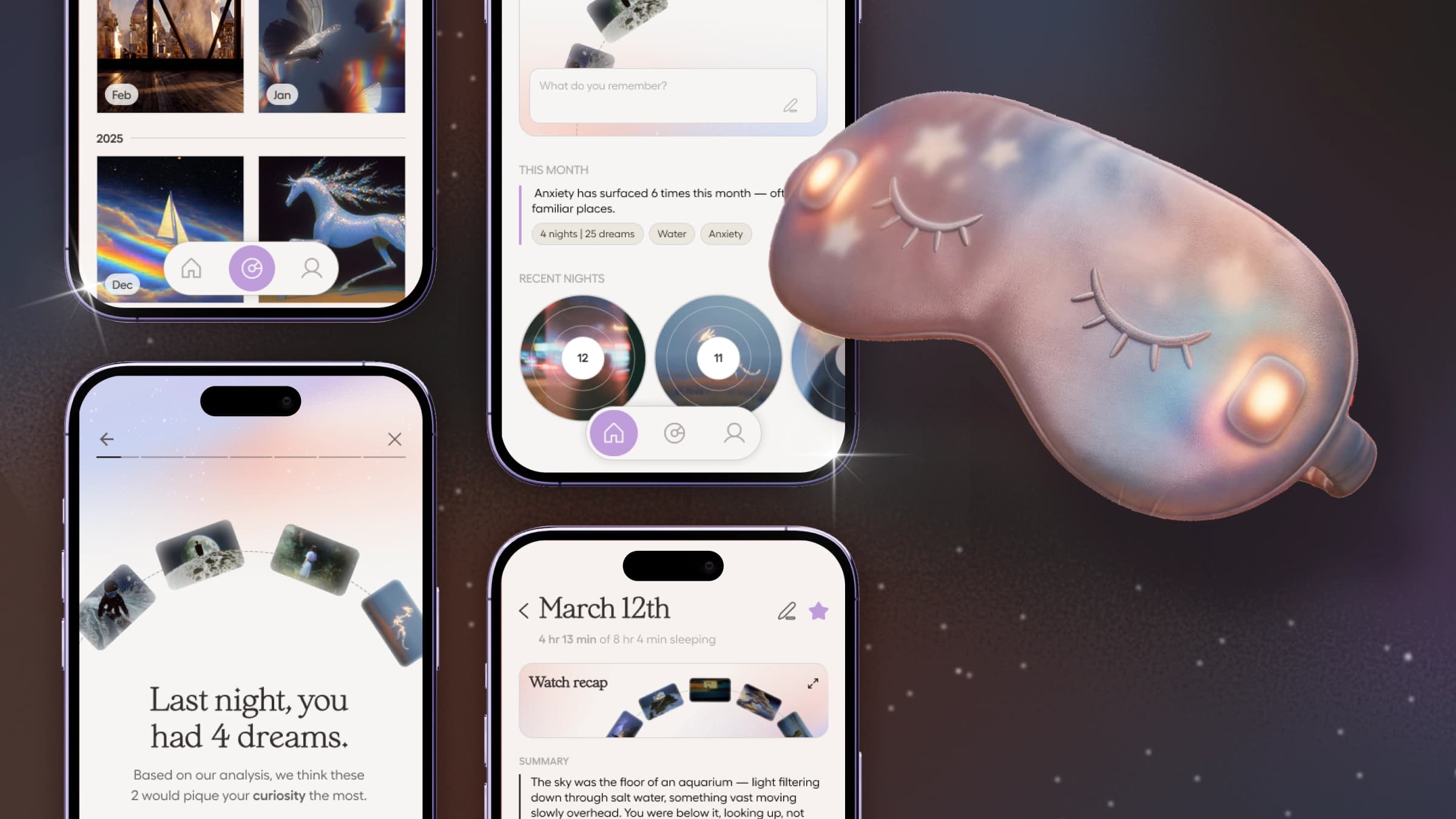
Reverie is a two-part product.
The prompt was open-ended by design, and actively encouraged fantastical, future-forward solutions. Having a purely digital product, especially for something as personal and sensorial as dreams, felt incomplete. A two-part solution let us match the texture of the problem: something you wear, and something you return to.
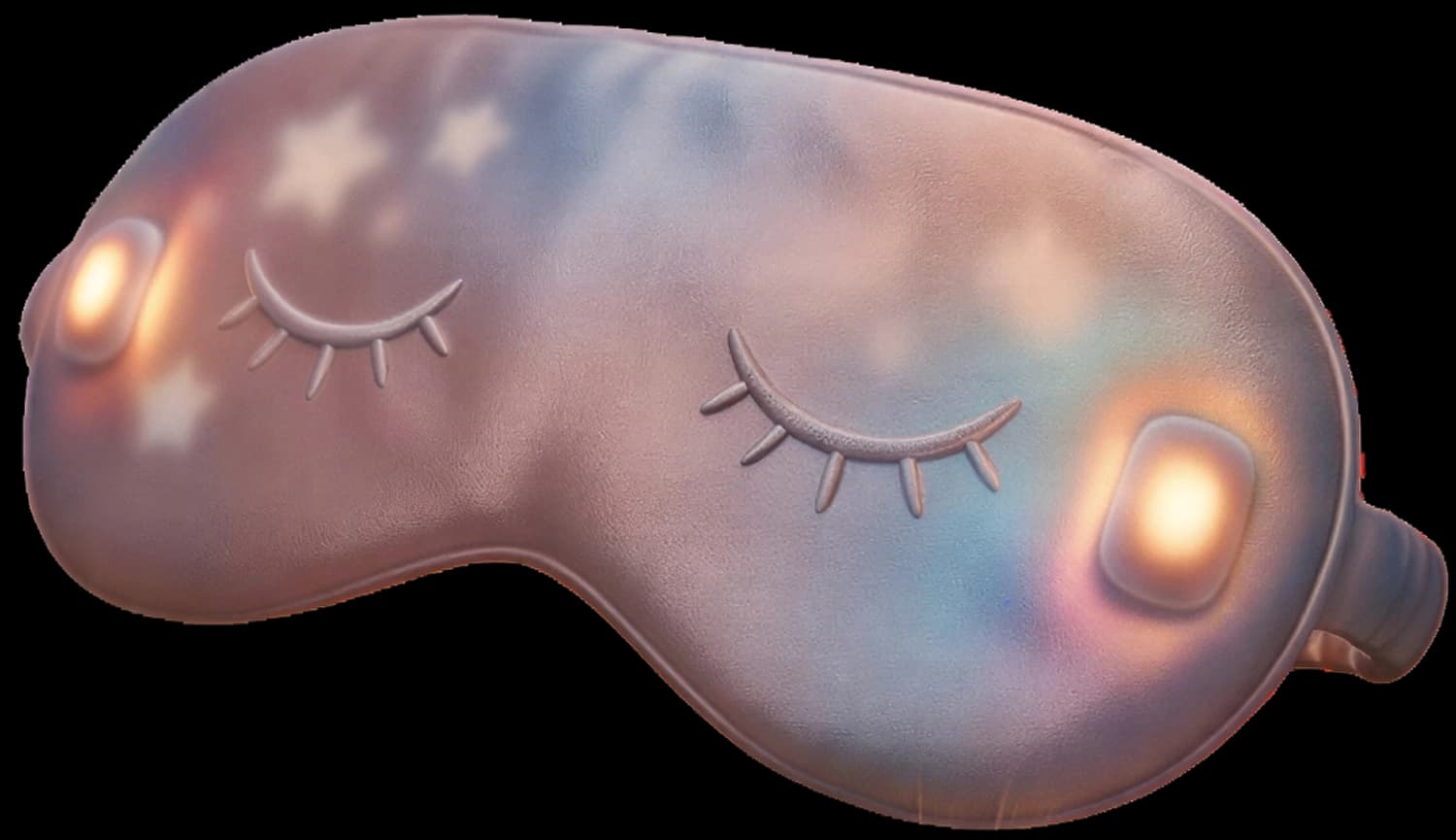
The Reverie VR Eyemask
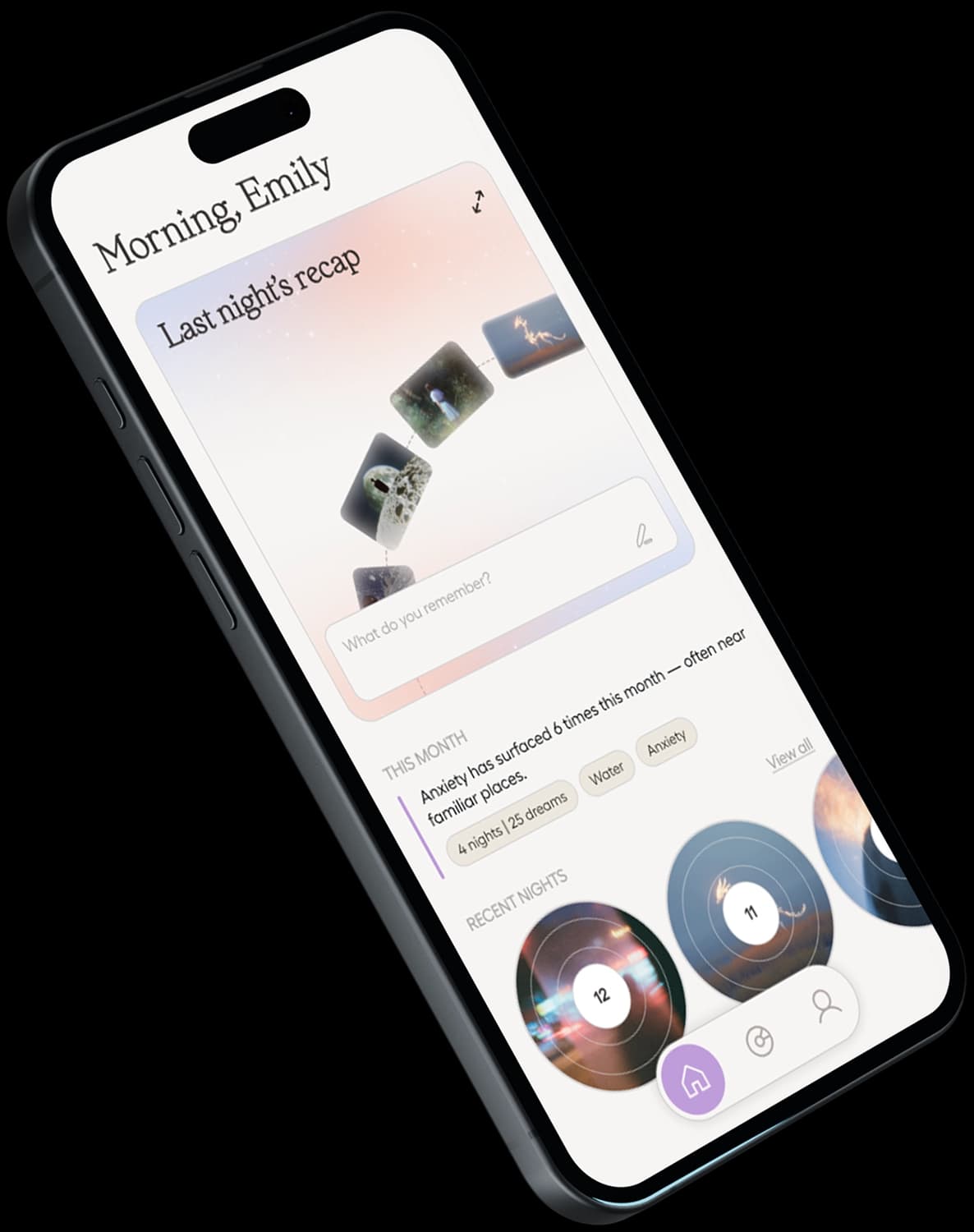
The Reverie App
PROCESS
3 Days of Iteration
Our iteration process was quick, efficient, and intentional. As we worked through our ideas, we addressed the project with a product-thinking mindset. It was important for us to focus on not just the features or visual design of the app, but also the core problems we were actually solving for the user.
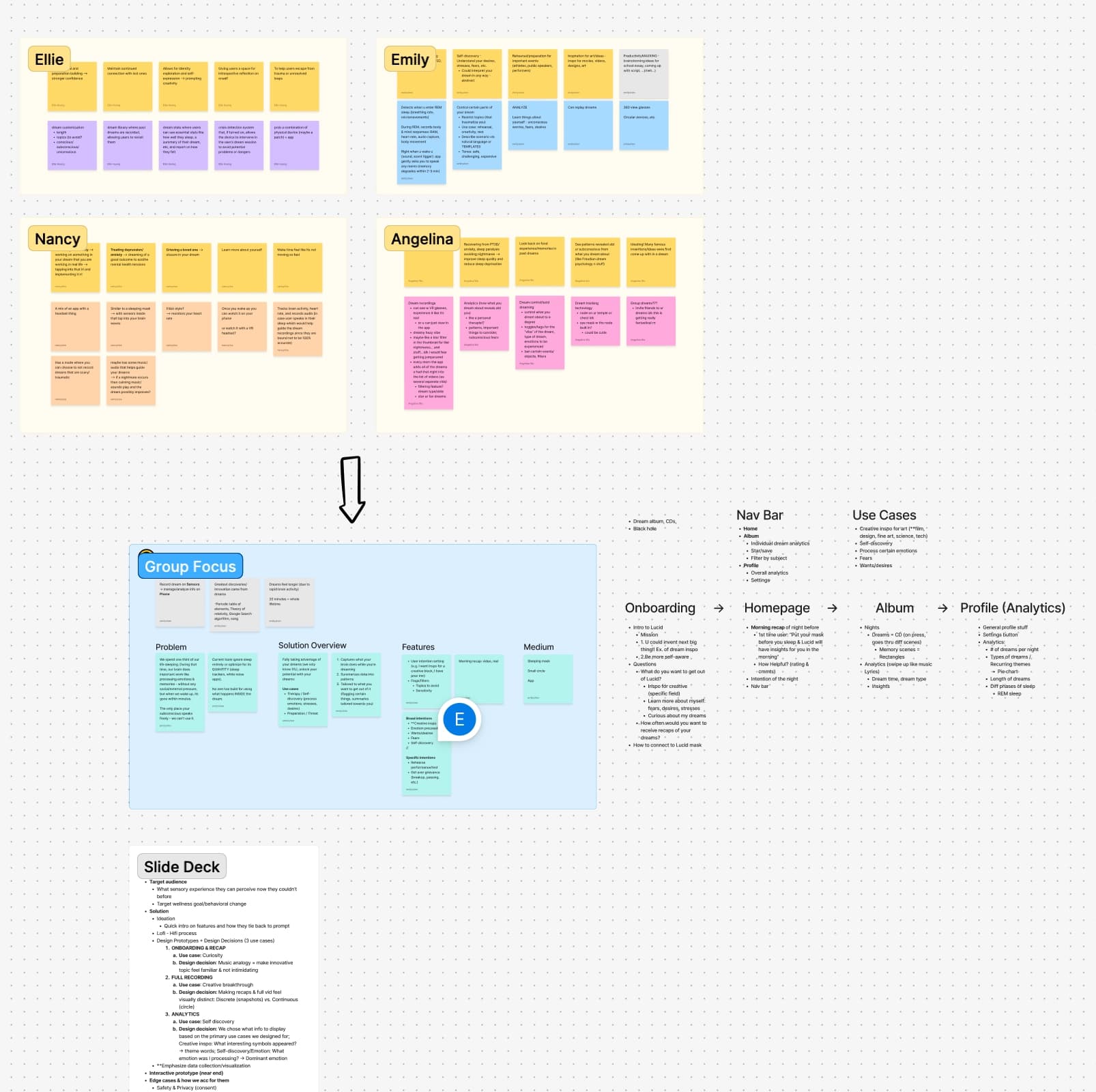
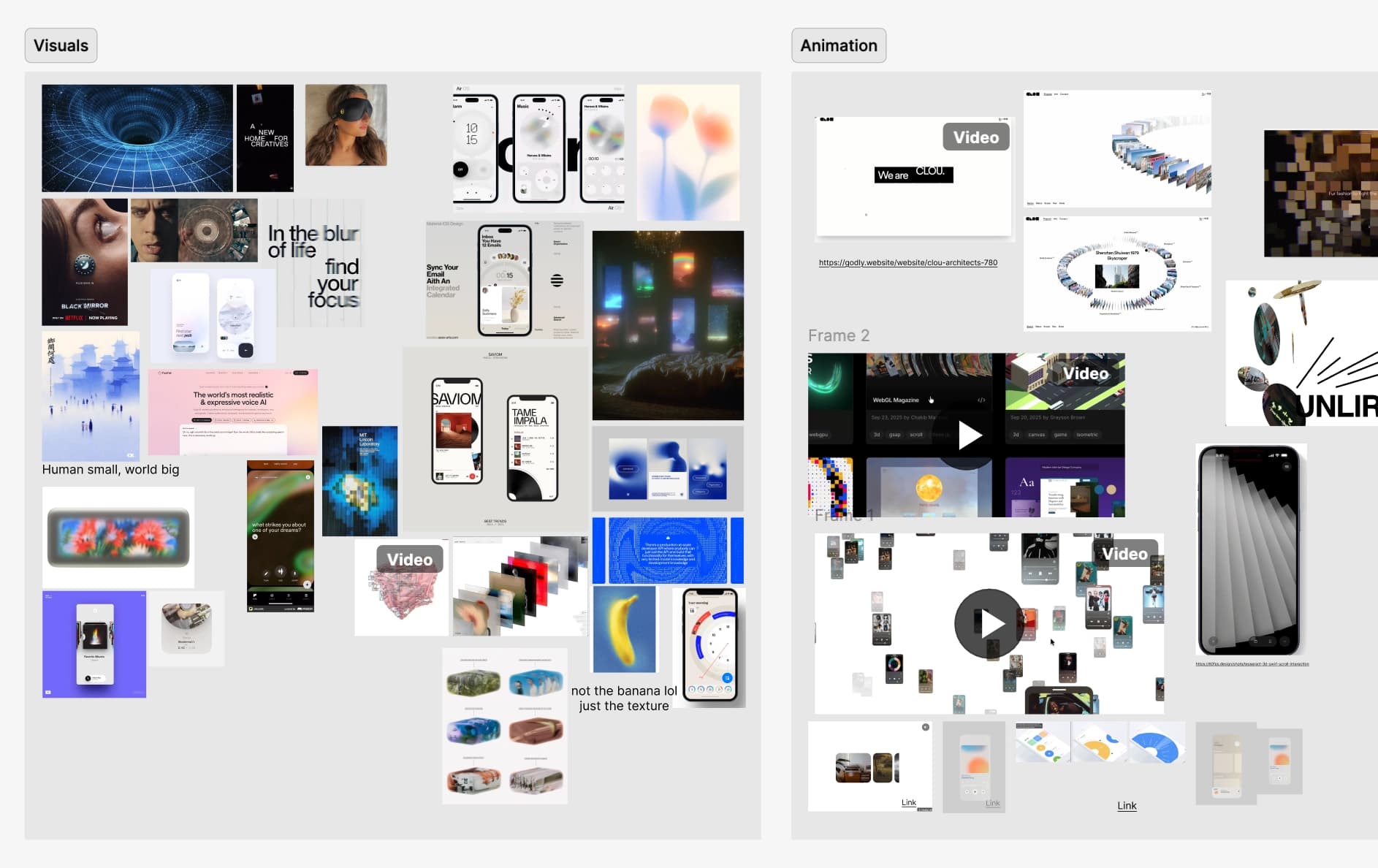
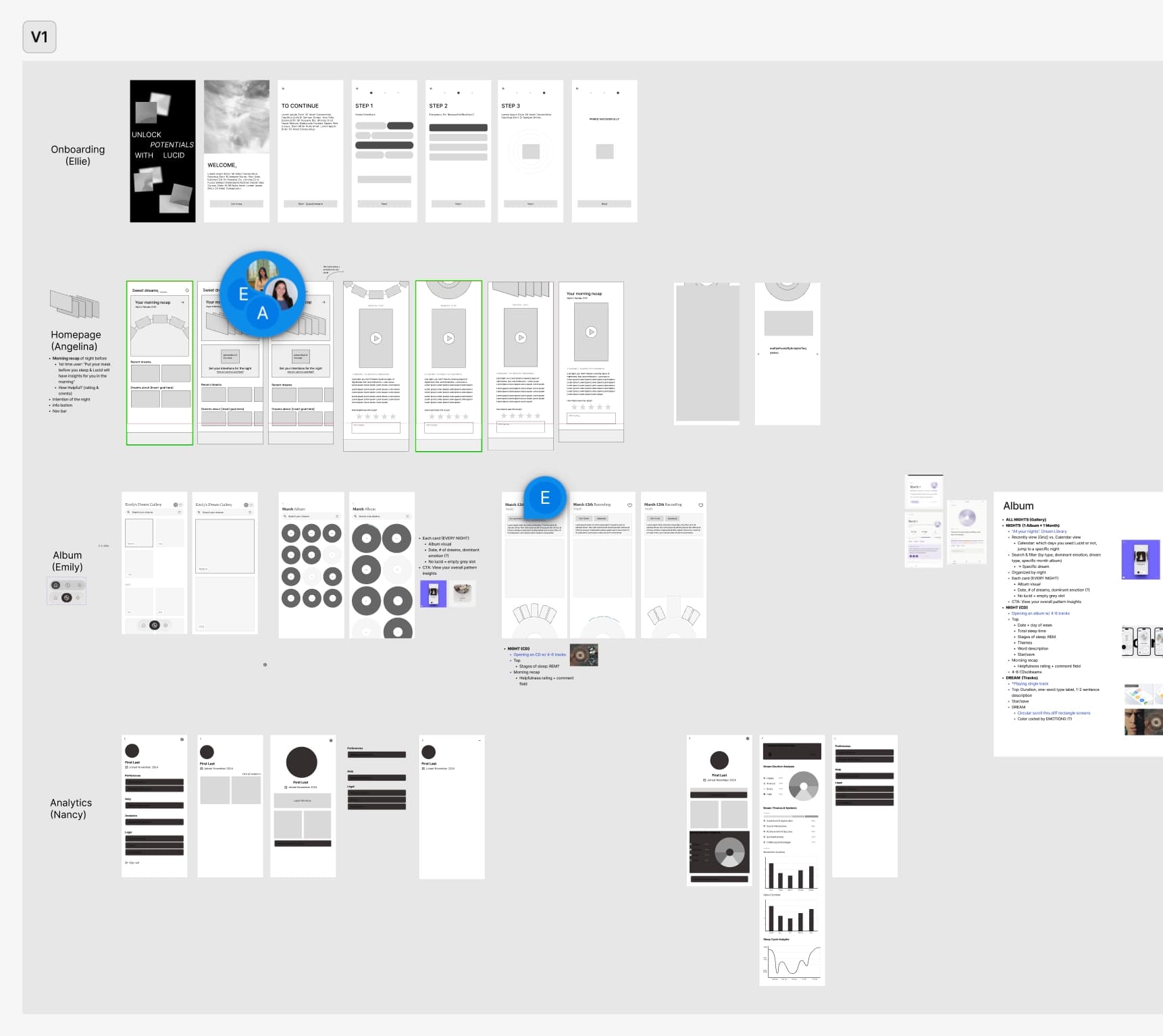
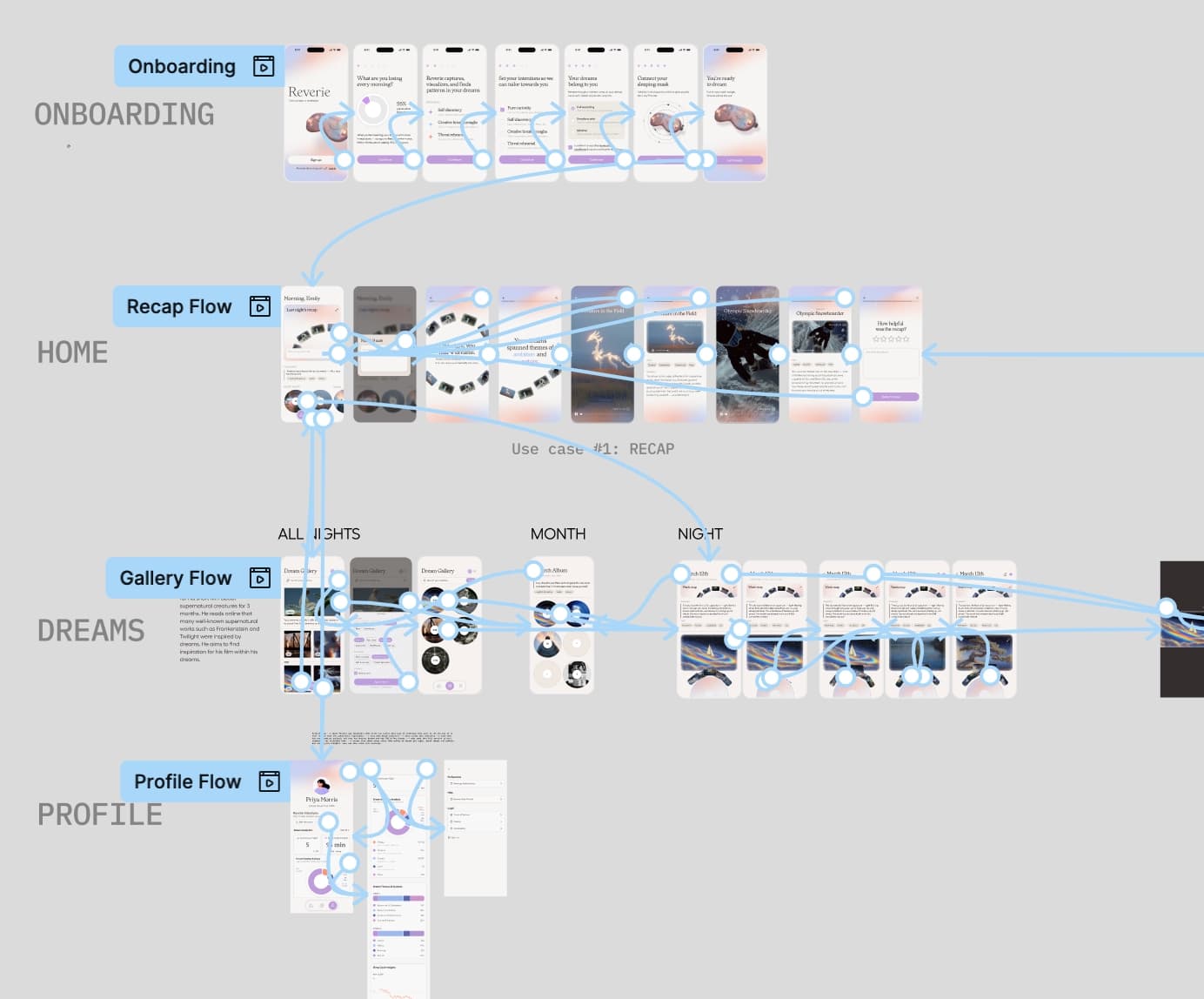
Left to right, top to bottom: our initial Figjam brainstorm, moodboards, low-fidelity wireframes, and prototyping.
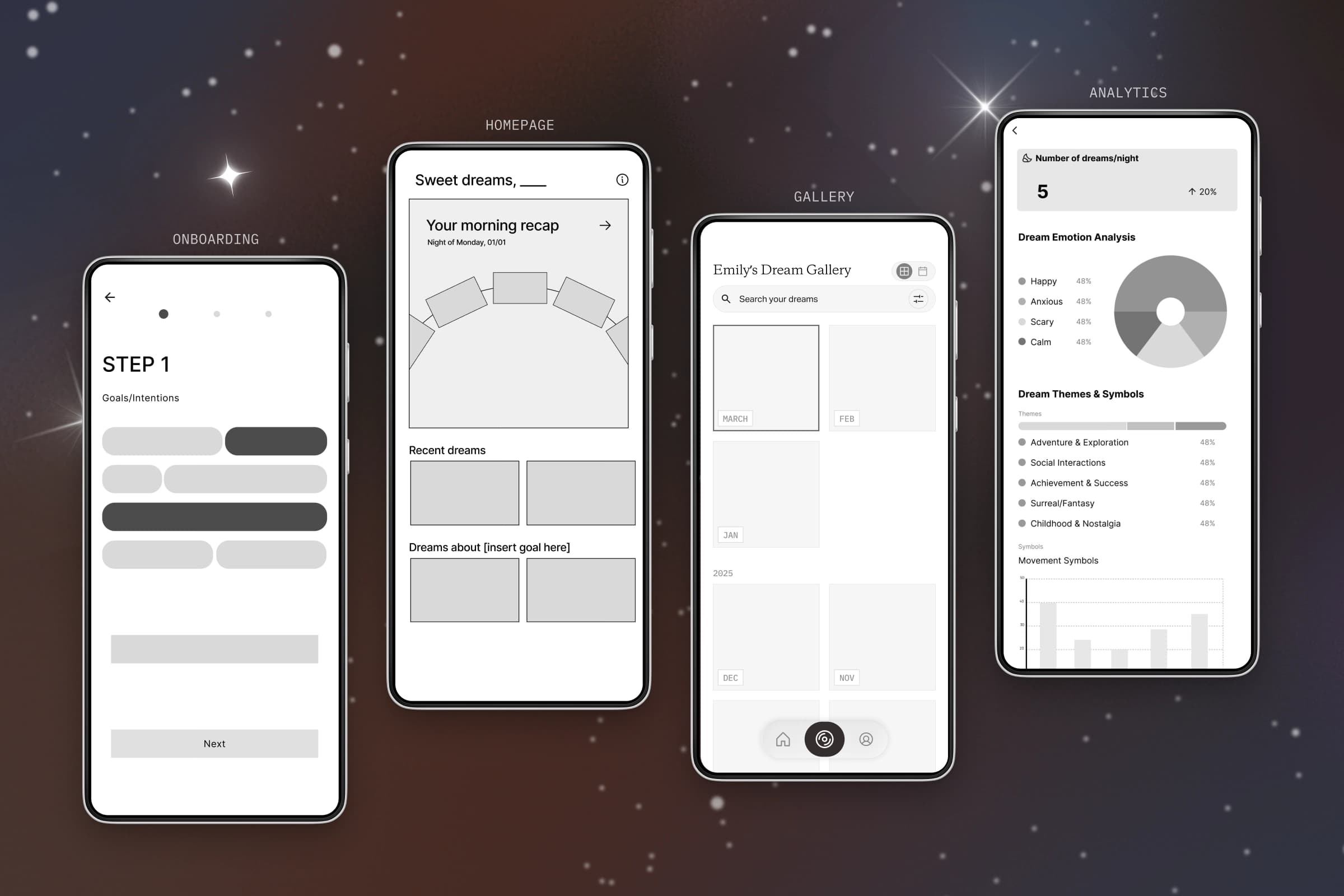
From lo-fi to hi-fi
Each team member owned a different flow. In this process, we discovered the difference between our unique approaches to design. When we came back together, we were able to combine our strengths and create a final cohesive product that addressed the problem from all angles.
AI TOOLS
AI-Accelerated Prototyping
With only 3 days to design an entire product, we needed to move fast. Our team used a combination of AI tools to both speed up and enhance our process. These tools helped us design solutions that we wouldn't have been able to accomplish on our own.
Midjourney for dream imagery
The dream-like imagery in the app came to life through the work of Tatiana Tsiguleva . We felt that the surreal aesthetic of her Midjourney-generated images was the perfect match for Reverie's creative direction, so we reached out for permission to feature her images in our designs.
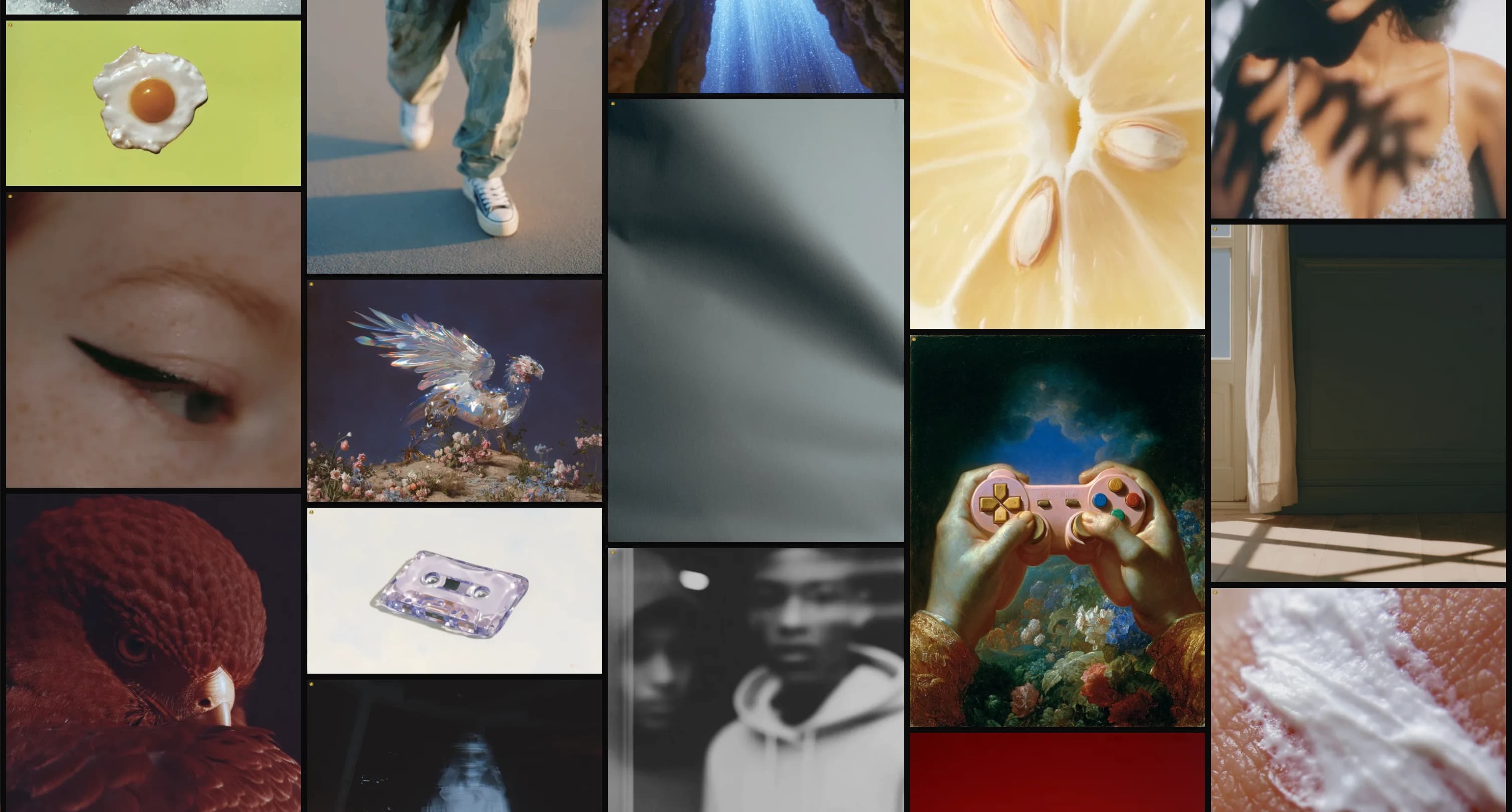
Images created by Tatiana Tsiguleva using Midjourney.
Prototyping in code with Figma Make and Cursor
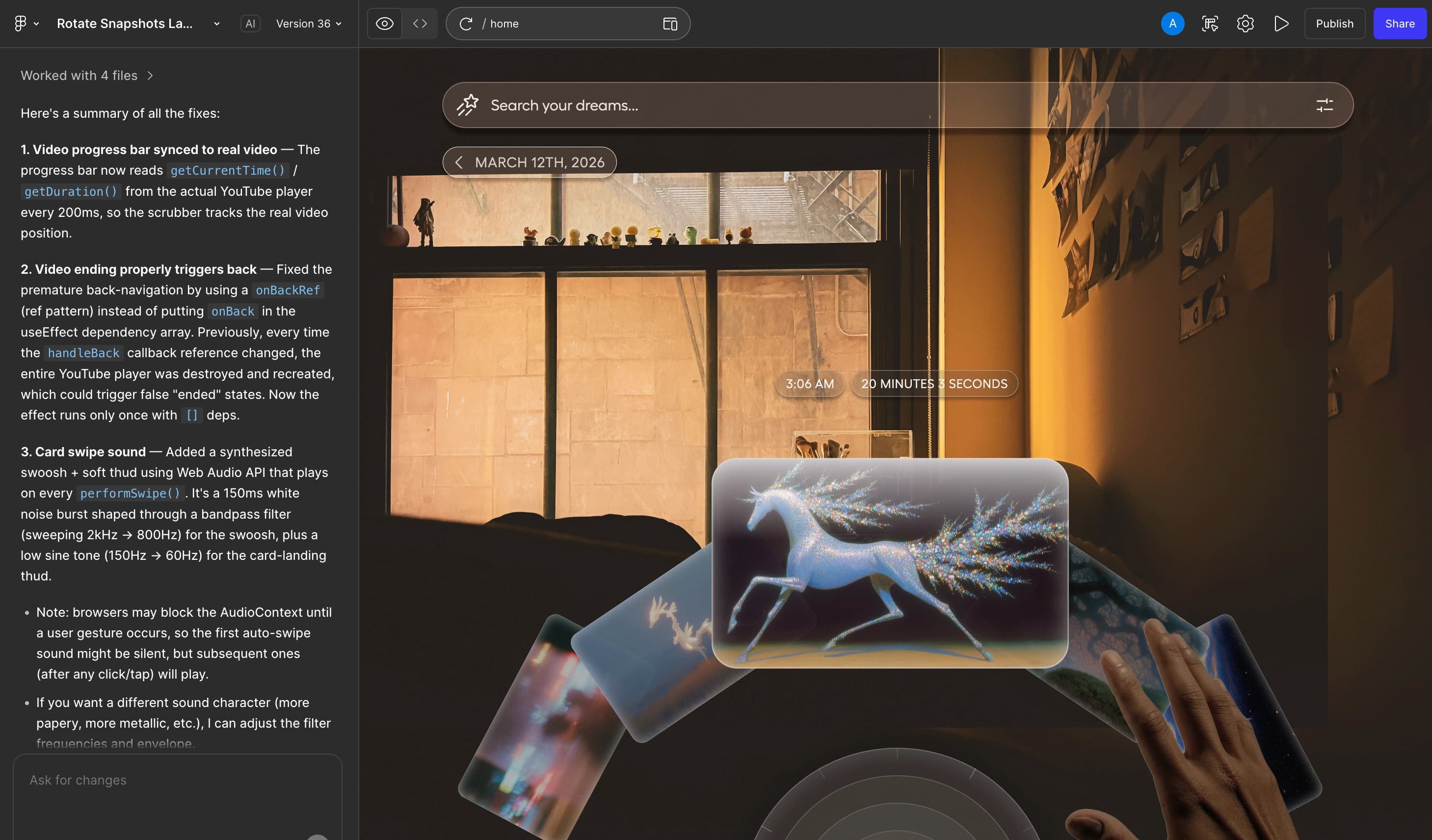
To create the prototype for Reverie's VR features, we primarily used Figma Make. This allowed us to quickly create an interactive mockup of the AR interface that was consistent with the rest of the app's design. For more the complex interactions, we brought the code into Cursor.
DESIGN
The Reverie VR Eyemask
The Reverie VR Eyemask is a dual-purpose sleep wearable that records and replays your subconscious. During the night, its sensors map brain activity to capture your dreams. By day, the mask becomes a high-resolution VR headset, where users can step back into a realistic 360° reconstruction of their favorite dreams from the night before.
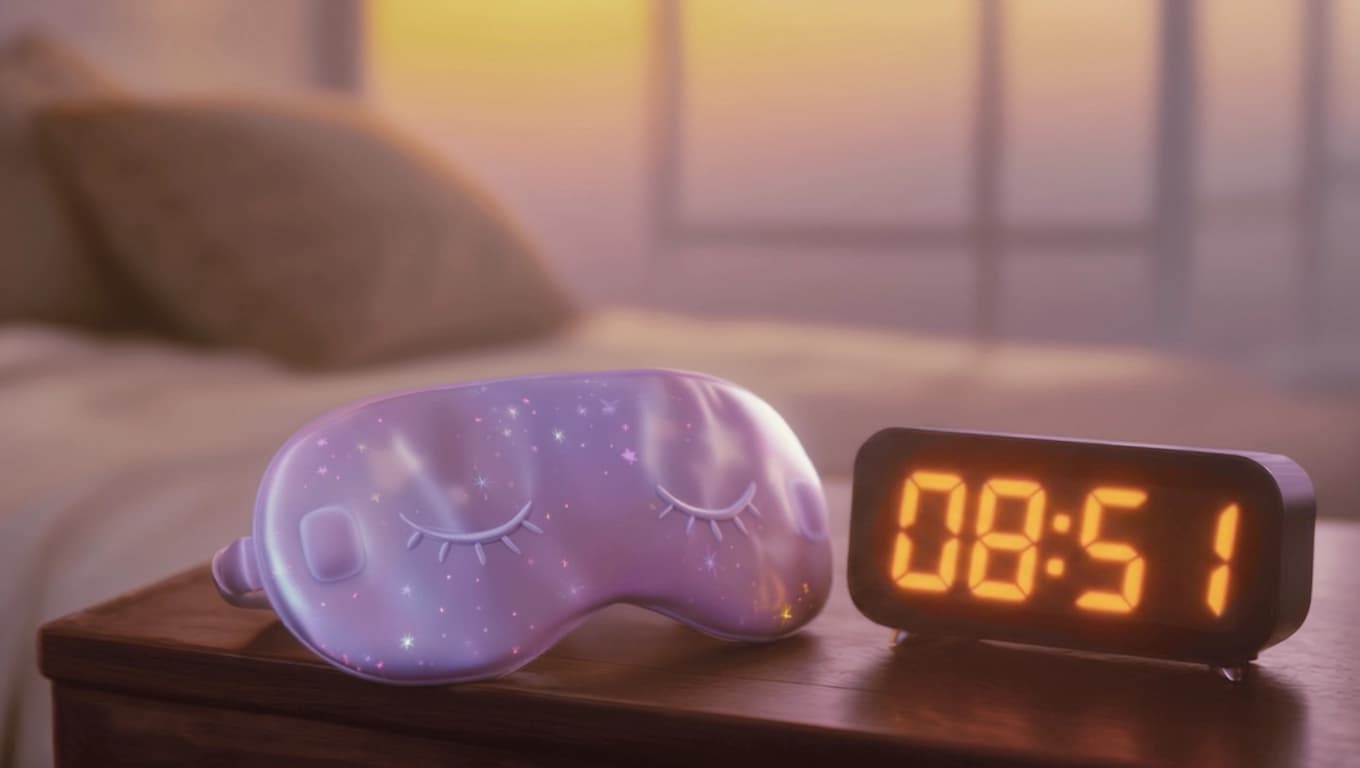
Dream replay in VR
The VR experience was designed to feel like a natural extension of the app. With the VR Eyemask, users can relive their dreams in vivid, immersive detail.
FEATURES
The Reverie App
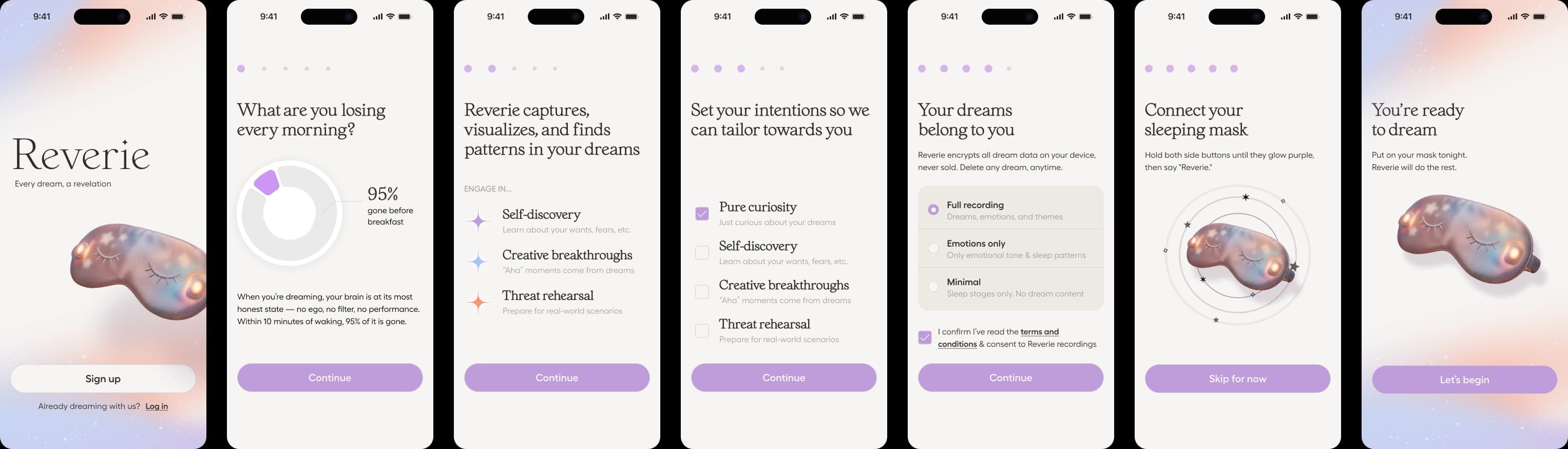
Privacy-first onboarding
Privacy settings appear before anything else. Users can control the amount of data that gets recorded before giving Reverie any access to their dreams.
Morning Recap
Every morning, the app surfaces a Spotify-Wrapped-style summary of the night before, based on what Reverie thinks would interest you most. It's the first thing you see when you open the app, and is designed to feel approachable and relevant.
Dream Gallery and Albums
Dreams needed a container that felt personal and collectible. We chose a record library as the organizing metaphor. Each night of dreams is represented as a CD, and each month's collection becomes an album.
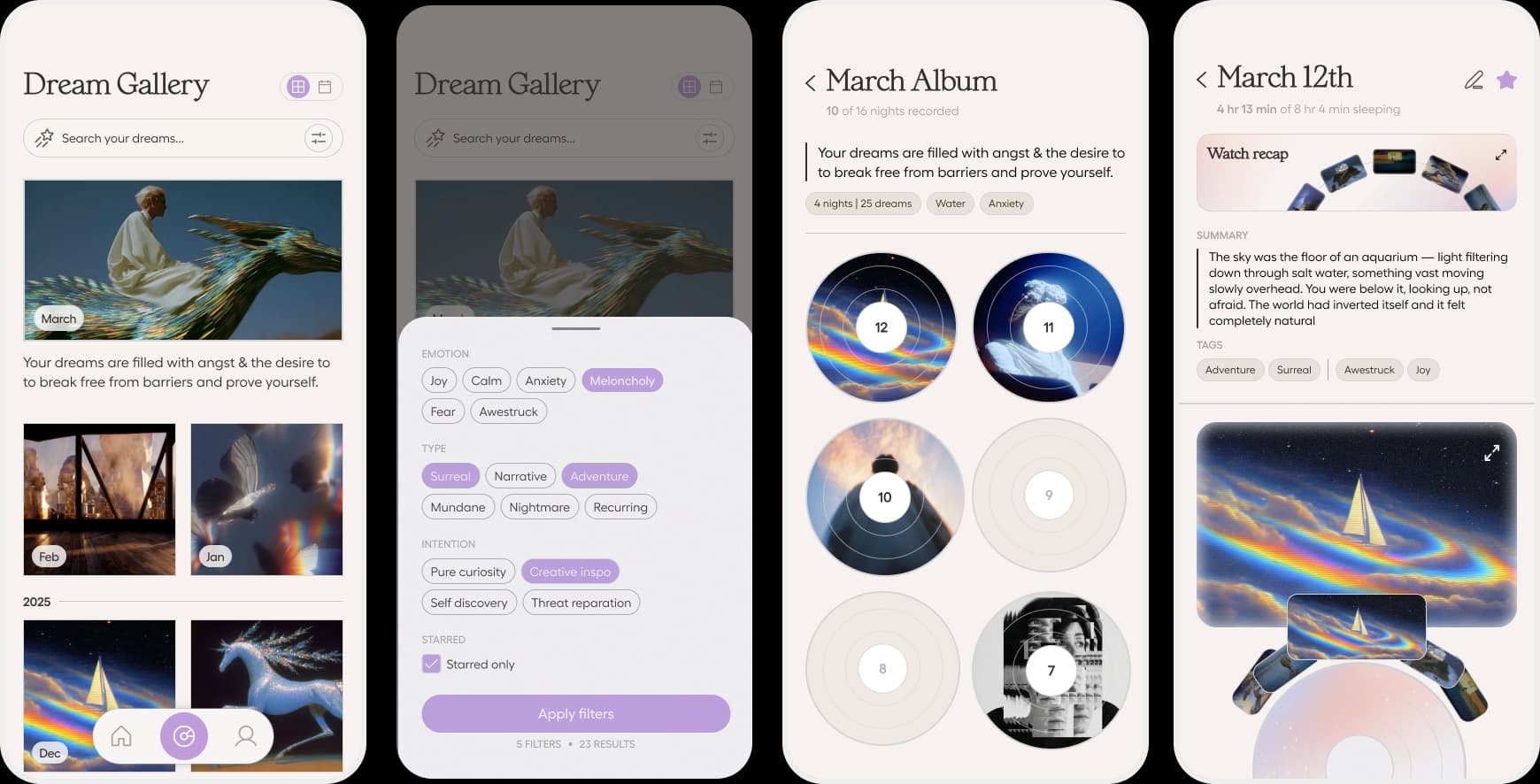
Patterns, not diagnoses
The Analytics feature of the app highlights patterns across dreams, helping users uncover emotional trends and recurring symbols without over-interpreting them as diagnoses.
CONSIDERATIONS
Edge Cases
Extra perception comes with responsibility. We identified several edge case scenarios where Reverie could potentially cause harm to users.
Misinterpreted data
Dreams are subjective, and users may treat analytics as definitive psychological insights. Reverie aims to present insights as suggestive patterns instead of conclusions, and allows users add their own interpretations.
Privacy and exposure
Dreams are deeply personal, so privacy is central to the Reverie experience. While privacy is currently introduced during onboarding, future iterations could potentially integrate visible privacy assurances throughout the product.
PITCH
Presentation
Our final slide deck for FigBuild 2026.
REFLECTION
Key Takeaways
The solution should be defined by the problem.
- Sleep is physical and personal, so a purely digital product would have felt incongruent. Making Reverie a combination of a wearable and an app was a design instinct that was ambitious, but ultimately worth following.
AI tools expand what's possible, not just what's fast.
- Without Midjourney, Figma Make, and Cursor, a polished prototype with a cohesive visual language wouldn't have been feasible in 3 days. Using AI tools didn't just speed things up, but also unlocked new potential outcomes.
Growth under constraints.
- The time pressure forced our team to divide and own, then converge and combine. We left with a product none of us could have made alone, and a much stronger sense of how to move fast with people you trust.
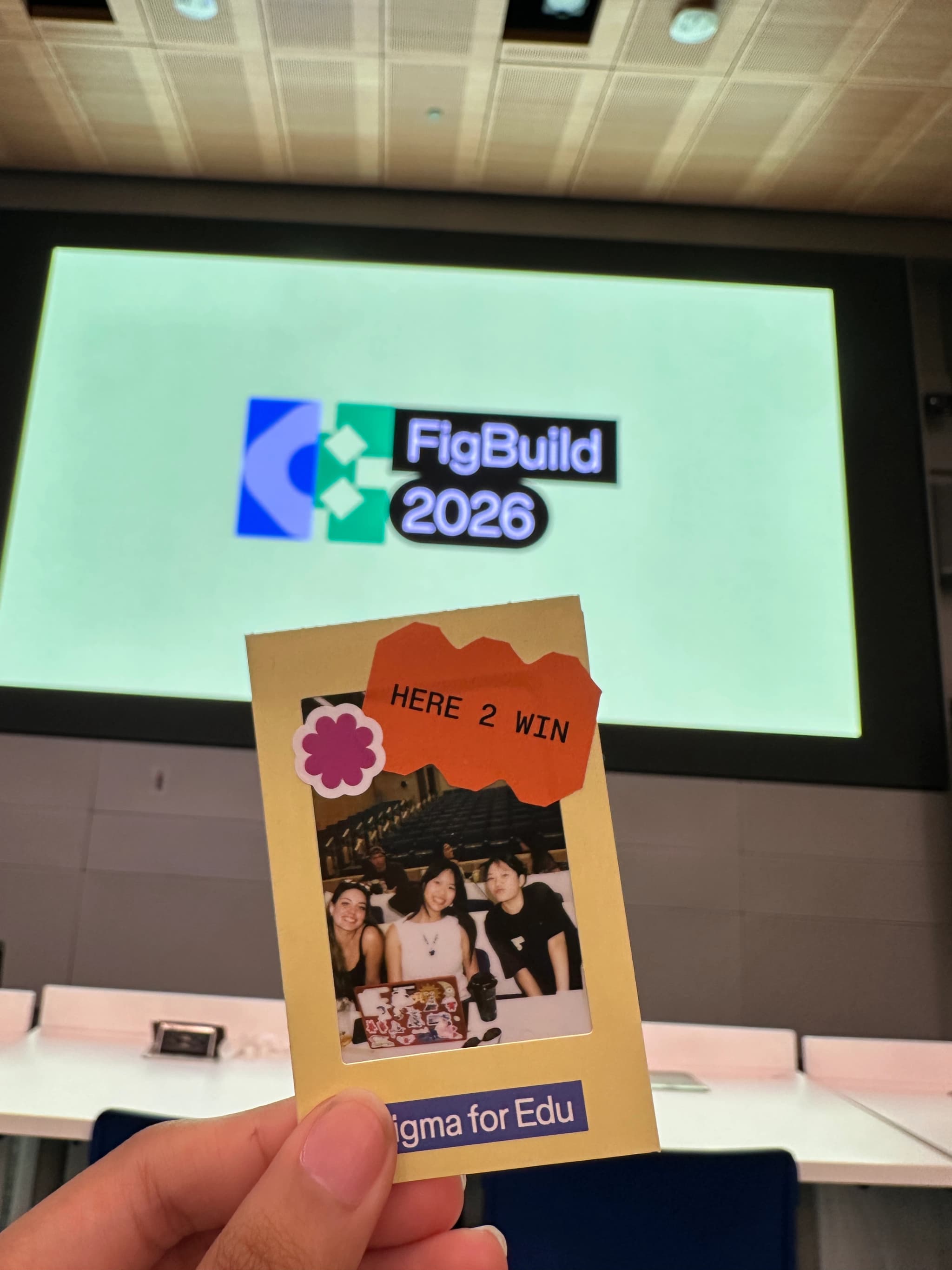
Thank you to my amazing team for such a memorable Figbuild experience (Ellie not pictured, but in spirit)! :)